TTA Group’s Sustainability Materiality Assessment (2-14,3-1)
To address key challenges affecting sustainable development, the Group places great importance on managing material sustainability topics that align with the interests of both the Group and its stakeholders, or where improved performance is anticipated. This approach enables the Group to set goals and strategies, as well as to effectively monitor and report on the progress of each material sustainability topic. The Group has conducted an assessment to review any changes to material sustainability topics, ensuring alignment with its strategies, stakeholder expectations, and the sustainability reporting standards of the Global Reporting Initiative (GRI). This assessment aims to reflect material sustainability topics that impact the Group’s environmental, social, and governance and economic (ESG) performance, as well as influencing stakeholder evaluations and decision-making across throughout the value chain. The materiality assessment results have been reported to and approved by the Board of Directors and consist of 4 key steps, as detailed below.
| 1. Material Sustainability Topics Identification | 2. Material Sustainability Topics Prioritization |
|---|---|
| The Group considers both positive and negative impacts, materiality as well as expectations and opinions of relevant stakeholders. Additionally, it conducts studies, reviews, and analyses of material sustainability topics related to its business based on the results of the Materiality Assessment. The analysis covers environmental, social, and governance and economic aspects, considering international sustainability standards, requirements, and best practices. It also includes an analysis of trends and key issues prioritized by leading companies in the relevant industry to ensure alignment with the Group’s sustainability efforts throughout the value chain. | The Group assesses the priority of material sustainability topics as part of the process for identifying material sustainability topics in accordance with the Global Reporting Initiative (GRI) standards. This evaluation considers 2 key aspects: 1) opportunities and impacts on the Group’s value creation, and 2) the level of interest, viewpoints, impact, and significance placed on these issues by stakeholders. The Group conducted an analysis of both aspects through an online survey involving 9 stakeholder groups, using the results to rank the priority of material sustainability topics. |
| 3. Material Sustainability Topics Validation | 4. Material Sustainability Topics Review |
| After the priority of material sustainability topics has been assessed, the identified topics are presented to the Sustainable Development Working Group and Sustainable Development Committee for acknowledgement and validate, ensuring alignment with the Company’s goals and strategies. The issues are then proposed to the Board of Directors for consideration and approval and/or review of material sustainability topics relevant to the Group. These topics will subsequently be disclosed in the Form 56-1 One Report or Sustainability Report accordingly. | The Group continuously monitors the management of material sustainability topics and regularly discloses performance related to material sustainability topics to ensure sustainable operations and development across the organization. This process aligns with reporting guidelines and standards. Additionally, the Group presents performance to the Sustainable Development Committee and the Board of Directors on an ongoing basis. This enables periodic review and improvement of material sustainability topics to ensure their relevance to the Group’s evolving business. |
Sustainability Materiality Matrix (2-25), (3-3)
The Group has identified 14 material sustainability topics, covering 3 dimensions: environmental, social, and governance and economic. These topics serve as a framework for managing the Group’s sustainability efforts and developing a comprehensive approach to sustainability management. The Group has prioritized these material sustainability topics, and the resulting levels of importance for each topic are shown as follows:
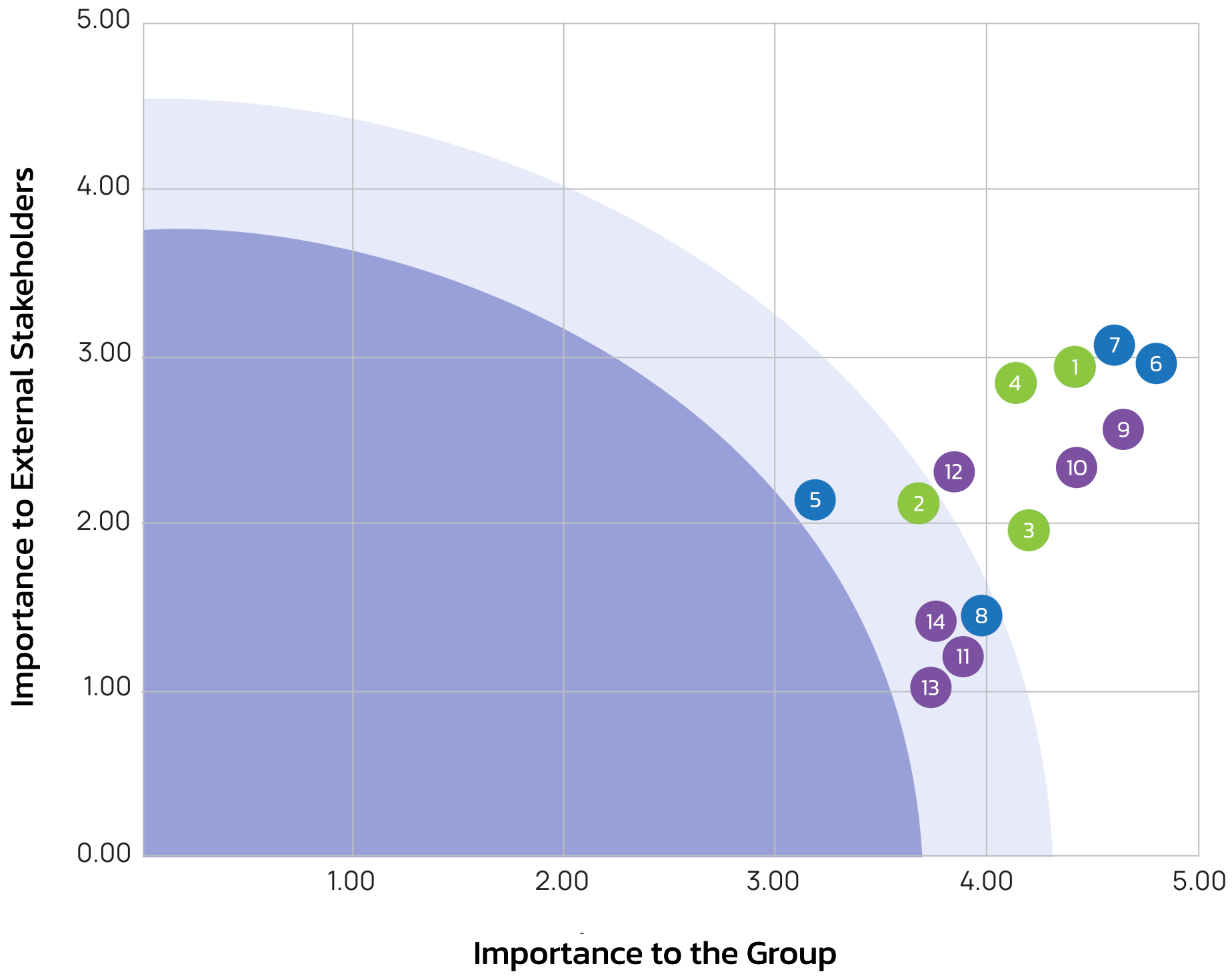
| Environment Dimension | Social Dimension | Governance and Economic Dimension |
|---|---|---|
|
|
|
The Group’s material sustainability topics assessment results have provided a framework for shaping its sustainability strategy for 2025, aligning operations with the identified material sustainability topics. Additionally, the Group has prepared a performance report, structured by material sustainability topics, for inclusion in the Form 56-1 One Report and the Sustainability Report. The disclosure of sustainability performance facilitates continuous review and improvement of each material sustainability topic, serving as a key mechanism for driving the Group’s sustainability efforts.
Reporting Principles (2-2,2-3)
This sustainability report covers data for the period from 1 January to 31 December 2025 and provides an overview of the Group’s performance. The Group aligns its efforts with the United Nations’ Sustainable Development Goals (SDGs) and references the Global Reporting Initiative (GRI) Index.
To ensure completeness and accuracy, as well as to create value for all groups of stakeholders, the content of this report undergoes a thorough review and material information disclosed recommendation and verification process by senior executives, the Sustainable Development Committee, and the Board of Directors. Furthermore, stakeholders are encouraged to provide feedback, inquiries, or suggestions. The inputs gathered will inform the Company on how to enhance the effectiveness of future sustainability disclosures.
Communication Channel
Corporate Affairs Department
Thoresen Thai Agencies Public Company Limited,
26/26-27 Orakarn Building, 7th Floor, Soi Chidlom
Ploenchit Road, Lumpinee, Pathumwan,
Bangkok 10330
Telephone : +66 (0) 2250-0569
Email : COR@thoresen.com